최신기사
ROTC commitment strengthened application
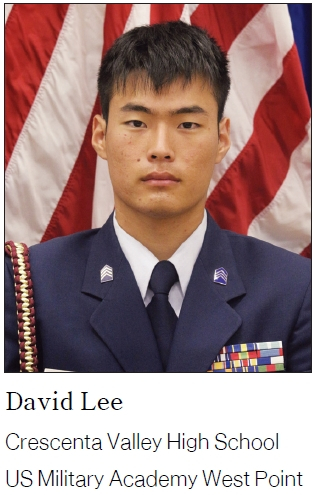
We asked students who have gone through the college application process about their college application experiences. Below are the common questions. 1. When and how did you start preparing for college applications? 2. How did you build your college list? What factors did you consider? 3. What was the most challenging part of completing your application, and how did you overcome it? 4. How did you approach requesting letters of recommendation? 5. How did you choose your essay topic, and what advice would you give for writing a strong personal statement? 6. What extracurricular or academic experiences made a significant difference? 7. How did you manage your time between academics and extracurricular activities? 8. If you could go back, is there anything you would do differently? 9. Besides grades, what is most important in making the most out of high school? 10. In what ways have you grown the most throughout high school? 11. How did you stay motivated during times of doubt or low confidence? 12. What is one piece of advice you would give to underclassmen? 정리 = 김소영 게이트웨이 아카데미 원장 ━ ROTC commitment strengthened application 1. I began preparing for college applications in 9th grade, specifically with the goal of attending West Point. From early on, I got involved in service and leadership activities like the American Red Cross Club, the football team, and JROTC. These experiences helped me build discipline, leadership skills, and a clear direction for my future. 2. I started building my college list in 9th grade by focusing on service academies like the Air Force Academy and Naval Academy, with West Point as my top choice. Later in my senior year, I added civilian colleges with strong ROTC programs. I considered factors like ROTC strength, scholarship opportunities, academic programs, alumni network, internship opportunities, career placement after military service, graduate school placement, campus life, and overall support for my long-term goals. 3. The most challenging part was balancing athletics, academics, and the number of interviews I had to go through for club leadership positions, service academies, congressional nominations, and ROTC scholarships. It became overwhelming at times. I overcame this by staying disciplined with my schedule, prioritizing what mattered most each week, and preparing in advance for interviews so I wasn't rushing at the last minute. 4. I believe requesting letters of recommendation starts as early as junior year by building genuine relationships with your teachers. It's not just about doing well in class but also talking to them about your goals and future plans. If you consistently show interest and effort, teachers are more willing to write you strong letters. 5. I chose my personal statement based on an experience that genuinely shaped who I am, even if it didn't seem that significant at first. My advice is that the topic should be simple, but unique. I would still avoid overly common topics like generic immigration stories or just writing about your parents unless you can present a very unique perspective. Also, choose a small number of people you trust to review your essays, and don't try to satisfy too many opinions or you'll lose your own voice. 6. I think one of the biggest factors was my commitment to ROTC. Even though I was involved in academics like research related to my intended major, my consistent interest in military leadership stood out. Earning a 4-year ROTC scholarship after multiple interviews was a major part of my application, and it likely strengthened my chances at civilian schools (besides Service Academies) with strong ROTC programs like Cornell, UC Berkeley. 7. I managed my time by planning ahead and staying consistent. I tried not to procrastinate, especially because my schedule was packed with sports, leadership roles, and academics. I also learned how to prioritize, understanding that not everything can be done perfectly, but the most important things should always be done well. 8. I would have done fewer extracurriculars and focused more deeply on around 8-10 activities that I truly cared about. Time in high school is limited, and I think going deeper rather than broader would have been more meaningful. 9. Besides grades, taking initiative is the most important. You shouldn't just follow what others tell you to do. You should actively seek out opportunities, create your own path, and take ownership of your goals. 10. I've grown the most through the college application process itself. It allowed me to take on leadership roles, build connections with adults across different organizations, create meaningful projects, and develop professionalism through interviews. 11. This might sound a bit unusual, but I tend to get more motivated when things get worse. I see difficult situations as rare opportunities to improve myself, so instead of backing down, I try to push harder and grow from it. 12. Don't rely too much on what others tell you, even parents or older students. Advice can help, but you need to take ownership of your own path. Be active, not passive. At the end of the day, you should understand your own goals better than anyone else. David Lee / Crescenta Valley High School·US Military Academy West Pointapplication commitment college applications your application college list
2026.04.28. 19:24
CLAP introduces Organic Thin Film Transistor (OTFT) application technology at CES 2023
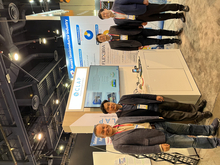
CLAP (CEO Sungho Kim, www.clap.co.kr), a company specializing in materials and parts for organic semiconductors and displays, participates in CES 2023, the world's largest consumer electronics and information technology exhibition, held at the Las Vegas Convention Center in the United States from January 5th to 8th. and exhibits Organic Thin Film Transistor (OTFT) application prototype. After acquiring OTFT material source patents and technologies from Germany's BASF, CLAP has its own organic semiconductor research fab and is actively developing application products based on material synthesis, application product design, and process technology, and is actively establishing business cooperation partnerships with domestic and global companies. OTFT has the advantage of manufacturing devices inexpensively with various coating processes (solution materials) without expensive deposition equipment, and it is possible to manufacture devices on plastic films such as PET, COP, and PEN in a low-temperature process (below 120℃). It is a next-generation TFT that can make products that are not bent or easily broken. As a driving substrate for Flexible Electronics that requires flexible functions, the possibility of using OTFT is very high. In addition to flexible characteristics, it is possible to provide various sensor solutions for IoT infrastructure and various form factors such as bendable, rollable, and wearable. In particular, the OTFT manufacturing process is eco-friendly. In the process, if the organic semiconductor and insulator contain the photoreactive material (CLAP’s Crosslinker : XL-100), direct patterning of the TFT becomes possible. The process can be reduced to 1/3 of the existing method using photoresist and reactive ion etching (RIE), hence obtaining an eco-friendly effect such as low carbon emission. This is one of the differentiated solutions of CLAP OTFT. At this CES 2023, CLAP prepared an exhibition booth in the IoT Infrastructure Sector (Korea Sensor Pavilion, Booth No. 10824) to showcase OLED Mobile large-screen fingerprint recognition sensor solutions based on Organic Semiconductor materials and Active Matrix driving prototypes for transparent Micro LED. Sungho Kim, CEO of CLAP, said, "Based on our core competencies in organic semiconductor materials and parts, we are prioritizing commercialization of TFT drive substrates for large-screen fingerprint recognition sensors and transparent and flexible Micro LED Displays. It will further promote technology through participation in CES 2023 exhibition and expand cooperative partnerships with global companies. Ultimately, CLAP wants to continue as an eco-friendly company that uses less energy, less waste, and less harmful substances based on organic semiconductor materials, and wants to become the world's best company in Flexible Electronics applications.” [Introduction to CLAP] CLAP is a start-up established by key personnel with more than 30 years of experience in the organic semiconductor and display industries. It is a top-notch research and development (R&D) company in Korea that holds more than 700 patents in related fields. In Korea, CLAP was certified as a 'specialized company for materials parts equipment' and was selected for the 'Baby Unicorn 200 Fostering Project' in recognition of its organic semiconductor technology by Korean government, and also won Korean government Award 'Ministry of Trade, Industry and Energy Award' of the Information Display Grand Prize at K-Display 2022 for its OTFT-based fingerprint recognition solution technology. CLAP is preparing for future growth by building business cooperation partnerships with domestic and global companies. 이동희 기자 ([email protected])application technology organic semiconductors information technology process technology
2023.01.04. 18:04
CATCH TABLE Launches an English Version of Its Application, Introducing K-Dining Culture to Foreigners
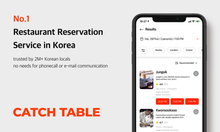
With its introduction to the application’s English version, CATCH TABLE expects foreign travelers who visit Korea to easily find great restaurants in Korea. Yong Tae-Soon, CEO of Wad Co., Ltd., announced on the seventh that CATCH TABLE released an English version of the application and that it can be downloaded from the App Store. CATCH TABLE explained that the intention of launching the English version is to promote Korean delicacies. Specifically, it aims to help foreigners who visit Korea to easily find good restaurants in Korea by using the application. The number of tourists is on the rise as COVID-19 testing is unnecessary for incoming travelers visiting Korea. Moreover, Korea allowed foreigners coming from 112 different countries to enter without a visa, also leading to the influx of tourists. CATCH TABLE is an application service that allows users to quickly and conveniently make live restaurant reservations. It provides a reliable service considering that more than 2 million Korean users actively visit the app just within two years of its first launch. The best part of this service is that the complicated communications, such as phone calls and emails, are removed in the reservation process. Particularly, users express high satisfaction on live reservations that are available twenty-four-seven. CATCH TABLE has services that foreigners may be interested in, such as customized curation list of Korean foods. It also plans to continue updating furthermore in the future. CATCH TABLE also provides additional services. Users may filter restaurants by △ Date △ Number of Parties △ Price △ Food type and △Table Type. Other information, for example, valet parking and corkage services may be checked at once as well. It also provides discount tickets on restaurants listed in the famous guidebook. According to one of the employees at CATCH TABLE, “We decided to start developing our English version because there were numerous requests on launching it”. He also stated that “incoming travelers in the past had a hard time emailing and waiting for an answer from restaurants to reserve seats; however, now they can search and easily reserve premium restaurants any time based on dates, time and number of parties”. 이동희 기자 ([email protected])application introducing english version catch table application service
2022.11.06. 17:37