최신기사
GLEC Challenges the Global Telematics Market with Next-Generation ATG Featuring AI-Based Automatic Analysis and Voice Guidance System
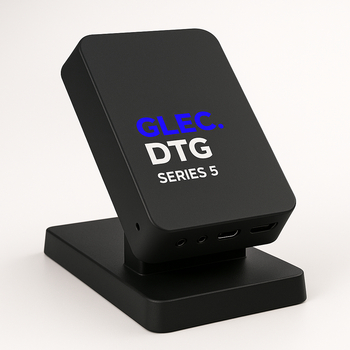
Korean logistics technology company GLEC is developing the next-generation AI Tachograph, the “ATG Series 5”, equipped with an AI-based automatic analysis and voice guidance system, which is scheduled to be officially unveiled at CES 2026 in Las Vegas next January. Currently in the final stages of development, the GLEC AI Tachograph Series 5 is designed to analyze driving data in real time through AI and automatically deliver key information via voice guidance. This marks an evolution beyond conventional digital tachographs, which merely collect and transmit data, signaling a shift toward a system where the ATG actively provides critical information directly to drivers. “Drivers don’t have the luxury of checking complicated dashboards or manipulating smartphones. The core is that AI makes the judgment itself and delivers the necessary guidance at the right moment through voice,” explained GLEC CEO and Chief Technology Officer Kang Deok-ho at the company’s Incheon research center. The ATG system under development operates as follows: If the AI detects fuel efficiency dropping more than 15% below average, it automatically announces, “Fuel efficiency is decreasing. Please reduce sudden acceleration.” When signs of drowsy driving are detected, the system alerts, “Fatigue accumulation detected. We recommend using the rest area 5 km ahead.” If the following distance reaches a dangerous level, it immediately warns, “Maintain a safe distance.” All of these processes are powered by 100% AI-driven automatic analysis. Without any driver input, the AI independently evaluates situations and provides voice guidance at the optimal timing. The company has also revealed that the system is being developed to support automatic voice guidance in 64 languages. The logistics industry is paying close attention to these advancements, particularly for their potential in improving long-haul driver fatigue management and fuel efficiency. However, challenges remain. Issues such as whether voice guidance will remain clear in noisy vehicle environments, how to design natural-sounding phrases across multiple languages, and whether overly frequent alerts might distract drivers are under review. To address these issues, GLEC has been conducting real-road environment tests for 12 months. “We are working to determine the optimal guidance frequency and timing across a variety of driving conditions,” said CEO Kim Eun-woo. A representative from a logistics company participating in the pilot test noted, “It’s great that the AI delivers only the necessary information via voice, so drivers can focus solely on driving.” GLEC has already been nominated for the CES 2026 Innovation Award and is in discussions with logistics companies in North America and Europe. Market research indicates that the AI-based vehicle management systems sector is expected to grow at an average annual rate of 22% by 2030. The industry is now watching closely to see what impact GLEC’s ATG technology will make in the global telematics market. 정현식 기자challenges telematics voice guidance automatic analysis necessary guidance
2025.09.14. 18:00
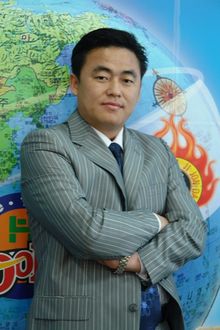
Chairman Kim Byung-gap: "Challenges of K-Food Globalization, Hoolala's Vision for the World"
Hoolala Group, a franchise company specializing in food services, is once again pursuing aggressive overseas expansion after the COVID-19 pandemic. Before the global health crisis, Hoolala had already made strides in international markets such as China, Southeast Asia, Japan, and the United States. Now, the company is focusing on expanding its portfolio of authentic Korean food concepts, including Hoolala Charcoal BBQ and Hong Chun Cheon Cheese Dak Galbi. We spoke with Kim Byung-gap, Chairman of Hoolala Group, to learn more about the company’s global ambitions. Q: What is the current status of Hoolala's international expansion? “Before the pandemic, our Hong Chun Cheon Cheese Dak Galbi locations in Tokyo and Manhattan performed very well, which sparked a lot of international interest in our brand. Recently, we've made our debut in the Philippines. Hoolala Charcoal BBQ also opened stores in Vietnam and India last year, both of which have been well-received. Now that the pandemic is behind us, we're in the process of signing contracts for 10 additional locations in Vietnam and India.” Q: What drives your passion for international expansion? “Our ultimate goal is to establish Hoolala as a global brand. We've had challenges, including a setback in China. But I remain committed to expanding internationally because I want to elevate K-food and Korean franchises to a competitive level on the global stage. Our mission isn’t just about making money, it’s about helping the Korean restaurant industry achieve global recognition and standards.” Q: Could you elaborate on this vision? “American brands like McDonald's and Starbucks have played a significant role in spreading American culture worldwide. They’ve successfully enhanced the American lifestyle and competitiveness. I believe it’s time for Korean brands to do the same, using food to spread Korean culture. With the current rise of the Korean Wave, there's a renewed global interest in Korea, and this is an opportunity we must seize. For the franchise industry to grow both in size and quality, many more Korean brands need to emerge and take on the global market.” Q: Why is the growth of homegrown Korean franchise brands so important? “Global food brands can become a major engine for national growth. The restaurant industry is a significant part of Korea's economy and has the potential to create millions of jobs. Korea’s self-employment rate is among the highest in the OECD, and while some argue that the number is too high, the demand for dining out, particularly in the evening, is uniquely strong in Korea. This culture can drive job creation and economic growth.” Q: Do you see the global expansion of Korean brands as a positive development? “Absolutely. Experts in the restaurant industry are saying that with the global rise of K-pop and K-dramas, there’s an unprecedented opportunity for Korean food brands to gain favor internationally. It’s crucial for local franchisees to seize this moment. The world is more receptive to Korean culture than ever, and this is the perfect time for Korean food brands to take their place in the global market.” Q: What advice would you give to those looking to enter the franchising world? “Franchise entrepreneurs need to have a strong conviction and a willingness to take risks if they want to build a global brand. Expanding overseas requires a deep understanding of franchising, as it’s essentially a 'cultural convergence product.' To succeed, you must integrate cultural elements into your brand or store, this is key to connecting with customers in diverse markets. The Korean Wave offers incredible opportunities because it embodies the blend of horizontal communication from our love room culture and the deep, affectionate connection known as 'Jeong,' both of which resonate with people worldwide. I believe the government also needs to recognize the food service industry as a vital policy focus and provide active support for overseas franchise companies. It’s also important to remember that global franchises are often built through failure. Global success doesn’t happen overnight, it requires hard work, persistence, and an unwavering commitment. Hoolala Group will continue to pursue these challenges without ever giving up.” 박원중 기자 ([email protected])globalization challenges korean food international expansion gap chairman
2025.01.07. 21:12