최신기사
GLEC Addresses Structural Overreporting of Road Freight Emissions with DTG-Based Measurement at CES
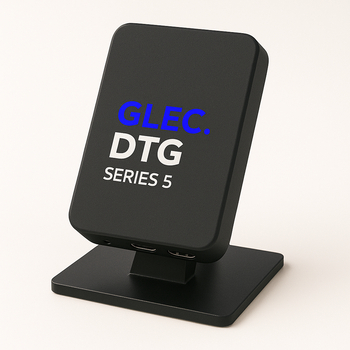
Korean logistics technology company GLEC participated in CES to present a solution to a long-standing structural issue in global carbon reporting: the systematic overreporting of road freight emissions caused by the absence of country-specific emission factors. As Scope 3 emissions disclosure becomes mandatory across major markets—including the European Union, Japan, and Hong Kong—companies operating within global supply chains are required to report logistics-related emissions under international standards. For road freight, however, many companies face a fundamental limitation when locally representative emission factors are not officially recognized. In the case of Korea, the lack of internationally approved Korea-specific emission factors and emission intensity values has forced companies to apply European or Latin American average benchmarks under global standards. This has resulted in reported emissions being inflated by approximately 12 to 21 percent, regardless of actual driving conditions, vehicle characteristics, or fuel efficiency. GLEC highlighted this issue at CES as a structural flaw rather than a data quality problem. “Even if companies operate efficiently, they can be penalized simply because appropriate national emission factors are unavailable,” the company explained. Such overreporting can directly impact ESG evaluations, supplier assessments, and long-term regulatory costs. To address this challenge, GLEC presented a dual-track approach combining real-time measurement technology with internationally approved Korea-specific emission factors. At the vehicle level, GLEC showcased its GLEC Carbon DTG and GLEC AI DTG Series 5, digital tachograph solutions that measure road freight emissions in real time based on actual driving data. These devices collect information on vehicle operation, fuel use, and driving patterns directly from commercial trucks, replacing estimate-based calculations with measurement-driven data. The GLEC AI DTG Series 5 further integrates artificial intelligence to analyze driving behavior, optimize fleet operations, and support driver safety management—expanding the role of DTG devices beyond compliance to operational intelligence. At the methodology level, GLEC independently developed Korea-specific diesel and gasoline emission factors, as well as road freight and logistics facility emission intensity values that reflect Korea’s real-world transport environment. These methodologies have received official approval from Smart Freight Centre, enabling their application under internationally accepted carbon accounting frameworks. With this approval, Korean companies can now apply nationally representative values rather than foreign averages, effectively eliminating the structural overreporting that previously distorted emissions disclosures. Data collected through GLEC’s DTG devices is processed and reported through GLEC LCS, the company’s API-based Logistics Carbon Standard platform. GLEC LCS supports standardized carbon accounting across all transport modes—including road, sea, rail, air, and logistics facilities—and across global regions, in compliance with ISO 14083. By presenting an integrated system that links on-road measurement, nationally representative emission factors, and internationally compliant reporting, GLEC positioned its CES showcase as a practical response to tightening global carbon regulations. “Overreporting emissions due to inappropriate benchmarks is not just a technical issue—it is a competitiveness issue,” a GLEC representative said. “Our goal is to ensure that companies are assessed based on how they actually operate, using real measurements and approved national methodologies, rather than assumptions.” 정현식 기자measurement emissions emissions disclosure emissions being road freight
2026.01.08. 16:29

GLEC Unveils Real-Time Road Freight Carbon Measurement DTG Lineup at CES
At CES, Korean logistics technology company GLEC drew attention from the global logistics and ESG community by unveiling a lineup of digital tachograph (DTG) solutions capable of measuring road freight carbon emissions in real time. Rather than presenting a conceptual framework, GLEC emphasized deployable, on-road technology designed for immediate use in commercial freight operations. The company showcased two flagship products: GLEC Carbon DTG and GLEC AI DTG Series 5. Both devices collect driving data, fuel consumption, and operational patterns directly from vehicles in real time, enabling precise measurement of carbon emissions generated during road transport. This approach represents a fundamental shift away from conventional methods that rely on averages, estimates, or post-calculation models. The GLEC Carbon DTG is designed to support real-time carbon measurement and fleet operation management, allowing logistics operators to monitor emissions based on actual vehicle activity. The more advanced GLEC AI DTG Series 5 integrates artificial intelligence to analyze driving behavior, manage fleet operations, and enhance driver safety—providing a unified platform that combines carbon measurement, operational efficiency, and safety management in a single onboard device. The importance of real-time, measurement-based carbon data has grown significantly as global disclosure regulations tighten. The European Union has led the adoption of mandatory Scope 3 emissions disclosure, and similar requirements are now being introduced in Japan and Hong Kong. As a result, companies participating in global supply chains must report road freight emissions with increasing accuracy and transparency. A key challenge for Korean companies has been the lack of internationally recognized Korea-specific emission factors and emission intensity values. Without these, companies are required to apply European or Latin American average values under international standards—often resulting in carbon emissions being overstated by approximately 12 to 21 percent, regardless of actual operating conditions. This structural issue can negatively affect ESG evaluations, supply-chain assessments, and long-term compliance costs. To address this problem, GLEC independently developed Korea-specific diesel and gasoline emission factors, along with road freight and logistics facility emission intensity values that reflect real-world operating conditions in Korea. These methodologies have received official approval from Smart Freight Centre, enabling their use within internationally accepted carbon accounting frameworks. Data collected through GLEC’s DTG devices is processed and reported via GLEC LCS, the company’s API-based Logistics Carbon Standard platform. GLEC LCS supports carbon accounting and reporting across all transport modes—including road, sea, rail, air, and logistics facilities—and across global regions, in compliance with ISO 14083. By integrating real-time measurement hardware with internationally approved emission factors and standardized reporting infrastructure, GLEC presented a comprehensive approach to logistics carbon management at CES—bridging the gap between on-road data collection and global regulatory compliance. “Accurate carbon management in road freight must start with real-time measurement, not assumptions,” a GLEC representative said. “By combining DTG-based data with internationally approved Korea-specific emission factors, we aim to ensure that Korean companies are evaluated fairly and accurately in the global regulatory environment.” 정현식 기자measurement freight carbon emissions time carbon real time
2026.01.07. 22:19

GLEC AI Tachograph Sets New Benchmark for Logistics Industry with Real-Time Carbon Measurement Every Second
Korean logistics technology company GLEC is redefining industry standards with its AI Tachograph (ATG), a breakthrough device capable of calculating carbon emissions in real time—once every second. Today, most logistics companies still calculate carbon emissions at the end of a month or quarter, typically relying on estimates. Yet, with the European Union’s Carbon Border Adjustment Mechanism (CBAM) coming into effect and the U.S. Securities and Exchange Commission (SEC) enforcing climate disclosure rules, precise data is no longer optional. Until now, however, real-time measurement has been considered technically unfeasible. GLEC has overcome this barrier. From the moment the AI Tachograph is installed in a vehicle, it begins calculating and recording carbon emissions every second. Acceleration, deceleration, idling, hill climbs—every driving condition is immediately reflected in the data. At the heart of GLEC ATG is its proprietary API calculation engine. The company has successfully optimized the internationally recognized ISO 14083 methodology—long considered too complex for real-time use—into an algorithm capable of delivering results within a single second. Pilot tests have already demonstrated the value of this innovation. In one case, significantly higher-than-expected emissions were identified on a specific route, allowing immediate route adjustments and driving behavior improvements to reduce both fuel costs and emissions. Ease of use is another advantage. Like a conventional digital tachograph, the ATG requires only installation in the vehicle. No complicated setup or driver training is needed. The system automatically collects and analyzes data, and, when necessary, provides voice alerts to warn drivers of reduced fuel efficiency. As the importance of accurate carbon data grows, global corporations are beginning to demand precise emissions figures from their supply chain partners. With GLEC ATG, logistics providers can meet these demands instantly. To ensure reliability, GLEC is conducting extensive testing across multiple vehicle types, from small trucks to heavy-duty fleets, verifying both compatibility and accuracy. GLEC plans to officially unveil the ATG Series 5 at CES 2026 in Las Vegas this coming January. Visitors will be able to witness firsthand how the device updates emissions data in real time, second by second, on actual vehicles. Industry experts predict that GLEC ATG will become more than just a measurement tool—it has the potential to drive the digital transformation of the logistics sector. For small and mid-sized logistics companies, in particular, it could enable carbon management capabilities previously accessible only to large enterprises. With the global carbon management technology market expected to grow rapidly through 2030, all eyes are now on how GLEC’s AI Tachograph will shape the future of logistics decarbonization. 정현식 기자measurement tachograph carbon emissions time measurement korean logistics
2025.09.16. 18:00