최신기사
[Column] CTF: Redefining the Paradigm of Climate-Tech Investment
Capital deployment for climate action has entered a stage of maturity. While countless funds highlight ESG and impact investing, few combine structural innovation with executional strength as effectively as the Climate Technopreneurship Fund (CTF). Managed by NH Absolute Return Partners (NH ARP), the Singapore-based subsidiary of NH Investment & Securities, CTF is a US $200 million fund endorsed by the Green Climate Fund (GCF). It goes beyond traditional capital mobilization, representing an ambitious attempt to redefine the philosophy of climate finance. Upgrading Blended Finance: Smart Blending At the core of CTF lies a precisely engineered structure that combines public first-loss capital with private investment. The Green Climate Fund (GCF) contributes US $83.75 million, representing about 42% of the total fund, as a first-loss tranche to protect downside risks for private investors. This structure goes beyond a conventional subsidy — it is designed so that GCF also participates in returns linked to fund performance, aligning public and private interests with exceptional precision. Given the historical loss rates in climate-tech investing and the risk premiums in emerging Asian markets, this level of protection represents a strategic design that maximizes both private-sector participation and capital efficiency. Practicality of a Multi-Strategy Approach: Bridging the Scale-Up Funding Gap CTF adopts a multi-strategy model, combining debt, mezzanine, and equity investments to bridge the funding gap that typically arises after the grant phase but before project financing. Debt investments provide stable cash flow and anchor the fund’s base returns, equity captures long-term upside potential, and mezzanine financing seamlessly links the two, optimizing the portfolio’s risk–return profile. This finely balanced structure enables the fund to deliver risk-adjusted returns demanded by institutional investors while sustaining the growth trajectory of innovative climate-tech enterprises. Precision in Impact Measurement: Setting a New Benchmark CTF sets clear, quantifiable goals of reducing 1.64 million tons of CO₂ annually and reaching 2.3 million beneficiaries. Each investment’s projected impact is calculated through a bottom-up approach, following internationally recognized methodologies such as those of UNFCCC, CDM, and IFC, and is independently verified to ensure credibility. By incorporating the realities of climate-vulnerable communities and balancing fairness with effectiveness, CTF enhances the rigor and integrity of its impact governance framework, establishing a new benchmark for climate finance accountability. Regional Expansion Strategy: Integrated Localization Model One of the key reasons global funds often underperform in Asia is the lack of local understanding and mismatched partnerships. CTF addresses these challenges by combining NH Group’s network of 37 offices across 14 countries with GGGI’s channels in over 50 member states. This integration establishes a collaborative framework that goes beyond simple deal sourcing to encompass technical due diligence, policy coordination, and post-investment monitoring. From early pipeline formation to execution and exit, the fund’s localization strategy is systematically embedded throughout the entire investment process. 7 Investment Themes: Reflecting Regional Specificities CTF’s investment themes encompass renewable energy, energy storage, low-emission transportation, energy efficiency, agricultural technology, water resource management, and waste management. These priorities directly address Asia’s structural challenges such as agricultural dependence, water scarcity, and the surge in waste generation driven by urbanization. While some of these areas attract relatively less market attention, they play a strategic role in raising the threshold for systemic transformation across the region. Case Study: Localization as a Strategy for Climate Solutions One of NH ARP’s representative investment cases is a portfolio company “A” that develops, owns, and operates renewable power generation assets centered on solar and wind energy. Unlike Korea’s centralized electricity supply system dominated by KEPCO, many Southeast Asian countries operate decentralized markets where private companies generate power through their own facilities and sell directly to consumers via power purchase agreements. Within this structure, the company commercially operates a cumulative 1 GW of wind and solar power capacity, achieving approximately 1.5 million tons of annual CO₂ reduction while maintaining stable profitability and sustained financial growth. This case illustrates NH ARP’s approach as an investment manager that goes beyond financial execution, deeply understanding the institutional, technological, and economic structures of local markets and translating that insight into effective, locally grounded investment strategies. Implications for the Korean Financial Industry The success of CTF offers meaningful lessons for Korea’s financial sector. Above all, ESG and climate investment have shifted from being optional initiatives to essential elements of competitive advantage. In an era where traditional financial returns alone can no longer define sustainability, incorporating climate risks and impact metrics as core variables in portfolio management has become the new standard. Moreover, the Asian market provides Korean financial institutions with a distinct comparative edge. Compared to their Western counterparts, they possess a deeper understanding of Asia’s industrial structures, policy environments, and social contexts. Leveraging these regional strengths to build local partnerships and operational capabilities can unlock new avenues for growth. Finally, future differentiation will depend on the ability to move beyond capital intermediation — to coordinate diverse stakeholder interests, blend public and private capital, and design sustainable financial architectures. The capacity to structure complex relationships and manage both capital and impact simultaneously will define the next frontier of competitiveness for Korea’s financial industry. Future Challenges: Talent, Exit, and Policy For CTF to sustain its success, several key priorities must be addressed. First, there is an urgent need to nurture interdisciplinary talent that bridges climate technology and finance. Such professionals must go beyond conventional investment analysis to assess both the economic and environmental implications of technologies and engage effectively with global partners. Second, diversification of exit strategies is essential. Since IPO markets in many Asian countries remain underdeveloped, alternative exit routes such as mergers and acquisitions (M&A) or strategic investor buyouts should be pursued in parallel. This approach will enhance capital recycling efficiency and foster a sustainable reinvestment cycle. Finally, stronger policy alignment is critical. Shifts in national climate policies and regulatory frameworks directly affect investment returns; thus, sustained dialogue with policymakers and joint program initiatives are vital to ensure institutional stability. The ability to coordinate between public policy and private capital will determine the long-term sustainability of climate finance. Conclusion: Challenging the New Standard CTF represents more than a single fund; it is a pioneering attempt to redefine the standard for climate finance. Regardless of whether its quantified goals of 1.64 million tons of CO₂ reduction and impacting 2.3 million beneficiaries are fully achieved, its blended structure, multi-strategy approach, and rigorous impact management already mark a significant milestone. As this model expands beyond Asia to the global stage, Korea’s leadership at this turning point will be particularly meaningful. The climate crisis is both the greatest challenge and the greatest opportunity, and CTF stands as a leading example of how that opportunity can be turned into tangible impact. 정현식 기자Column redefining investment private investment climate finance green climate
2025.11.21. 0:01
"ASTERN 55," a Super Penthouse Redefining Absolute Luxury Living
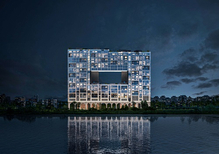
Recent survey findings indicate a faltering growth momentum in the global real estate market; nevertheless, the world's wealthiest individuals persist in investing in ultra-luxury residences. Knight Frank, a real estate consulting company, reports a total of 417 transactions involving properties valued at over $10 million (approximately 131 billion Korean won) in the global housing market during the first quarter of this year. This reflects an 11% increase from the previous quarter, representing the largest scale since the second quarter of 2022. Notably, the Azabudai Hills Penthouse by Mori Building in Tokyo, Japan, fetched $150 million (200 billion Korean won) in auction this year, and other residences exceeding $50 million have entered the market. In Korea, there is a rising interest in the high-end real estate market. According to Credit Suisse's '2022 Global Wealth Report,' Korea ranked 11th globally in terms of the scale of ultra-high-net-worth individuals (with a net worth of $50 million) as of the end of last year. Real estate developer “Aster Development” introduces the nation's first super penthouse, “ASTERN 55” set to be supplied in the first half of next year, positioned along the luxurious Han River residences with duplex and triplex designs. ASTERN 55 boasts an unparalleled location, providing residents with the enduring value of the "Han River view," a privilege enjoyed by only a select few in the country. Differentiated product design, maximizing panoramic views of the Han River for every unit, sets ASTERN 55 apart. The building faces the Han River, with a length of 128m, and features approximately 30m wide layouts for each unit, ensuring a stunning river view from the deepest points within the residences. Additionally, a sky garage is incorporated for all units, allowing residents to enjoy views of the Han River. Particularly noteworthy are the triplex units, where the combined length of the sides facing the Han River totals an impressive 121m, providing an exclusive and unobstructed view of the Han River. The transformation of a private standalone mansion into a collective housing complex with 26 units is a distinctive feature of the 'Astern55' project. Spanning a total floor area of 37,674 square meters, Astern55 incorporates innovative design concepts not previously attempted in the domestic market. This allows each household to exist as a perfectly private standalone mansion while collectively forming an entire residential complex. Exclusively for the 26 households residing in Astern55, the project boasts approximately 60 elevators and an average of 9 parking spaces per household (up to a maximum of 20), providing residents with an unparalleled luxury living experience. Furthermore, every homeowner has the option to install a swimming pool within their residence. The development embodies Aster's philosophy of luxury living, starting with the realization of a perfect private realm, featuring exclusive amenities such as a private elevator, drop-off zone, parking, and more, designed for the sole enjoyment of the residents. Taking inspiration from London's "Iceberg Homes," Aster maximizes underground space utilization. Modeled after the luxury lifestyle of the super-rich, the design includes underground facilities like a swimming pool, private cinema, gallery, fitness center, and even an underground parking facility. Setting itself apart from conventional high-end residences, Astern 55 introduces a unique interior design and operational system. The "Tailor-made System," a first in Korea, involves direct consultations with five world-renowned luxury artists, including Vincenzo de cotiis Architects and jouin manku allowing residents to customize their homes from a holistic perspective, not just limited to simple customization of walls or furniture. Residents of ASTERN 55 will have access to approximately 3,300 square meters of amenity facilities, including a spa, fitness center, chef's dining table, and a cinema. The amenities are designed to be used through independent pathways, ensuring privacy. Operations and concierge services for amenities will be overseen by the upcoming super-luxury membership club, 'DYAD CHEONGDAM1,' in the heart of Cheongdam-dong, offering a prospect of 6-star hotel-level services. Residents will automatically become members of the society club 'DYAD CHEONGDAM1.' The club, situated in the center of Cheongdam-dong, spans from the 4th underground floor to the 16th above ground, featuring a sky lounge, infinity pool, indoor pool, pub, business rooms, global fine dining, multi-rooms, and other exclusive community facilities. Services such as chef catering, security consultation, legal advice, and accounting and tax consulting are also available. As the first super penthouse supplied in Korea, ASTERN 55 is poised to set new standards for ultra-luxury homes in the country. With a record-breaking expected price and the unique feature of a permanent Han River view, ASTERN 55 is positioned to become an irreplaceable ultra-luxury residence in Korea. Aster Development, spearheading the project, collaborated with top experts domestically and internationally for three years. The project involved collaborations with world-renowned artists and brands such as Dominique Perrault, Yabu Pushelberg, Vincenzo de Cotiis, Jouin Manku, Officine Gullo. Located near Dosan Intersection in Sinsa-dong, Gangnam-gu, ASTERN 55 operates on an exclusive pre-reservation basis, catering solely to thoroughly vetted clients. The project is associated with the Aster Gallery, known for its authenticity and operates as a haven for the discerning few who appreciate the pinnacle of luxury living. 김진우 기자 ([email protected])redefining penthouse luxury residences hills penthouse billion korean
2023.11.27. 15:00