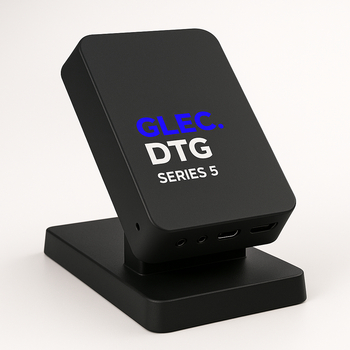
GLEC Challenges the Global Telematics Market with Next-Generation ATG Featuring AI-Based Automatic Analysis and Voice Guidance System
Korean logistics technology company GLEC is developing the next-generation AI Tachograph, the “ATG Series 5”, equipped with an AI-based automatic analysis and voice guidance system, which is scheduled to be officially unveiled at CES 2026 in Las Vegas next January. Currently in the final stages of development, the GLEC AI Tachograph Series 5 is designed to analyze driving data in real time through AI and automatically deliver key information via voice guidance. This marks an evolution beyond conventional digital tachographs, which merely collect and transmit data, signaling a shift toward a system where the ATG actively provides critical information directly to drivers. “Drivers don’t have the luxury of checking complicated dashboards or manipulating smartphones. The core is that AI makes the judgment itself and delivers the necessary guidance at the right moment through voice,” explained GLEC CEO and Chief Technology Officer Kang Deok-ho at the company’s Incheon research center. The ATG system under development operates as follows: If the AI detects fuel efficiency dropping more than 15% below average, it automatically announces, “Fuel efficiency is decreasing. Please reduce sudden acceleration.” When signs of drowsy driving are detected, the system alerts, “Fatigue accumulation detected. We recommend using the rest area 5 km ahead.” If the following distance reaches a dangerous level, it immediately warns, “Maintain a safe distance.” All of these processes are powered by 100% AI-driven automatic analysis. Without any driver input, the AI independently evaluates situations and provides voice guidance at the optimal timing. The company has also revealed that the system is being developed to support automatic voice guidance in 64 languages. The logistics industry is paying close attention to these advancements, particularly for their potential in improving long-haul driver fatigue management and fuel efficiency. However, challenges remain. Issues such as whether voice guidance will remain clear in noisy vehicle environments, how to design natural-sounding phrases across multiple languages, and whether overly frequent alerts might distract drivers are under review. To address these issues, GLEC has been conducting real-road environment tests for 12 months. “We are working to determine the optimal guidance frequency and timing across a variety of driving conditions,” said CEO Kim Eun-woo. A representative from a logistics company participating in the pilot test noted, “It’s great that the AI delivers only the necessary information via voice, so drivers can focus solely on driving.” GLEC has already been nominated for the CES 2026 Innovation Award and is in discussions with logistics companies in North America and Europe. Market research indicates that the AI-based vehicle management systems sector is expected to grow at an average annual rate of 22% by 2030. The industry is now watching closely to see what impact GLEC’s ATG technology will make in the global telematics market. 정현식 기자challenges telematics voice guidance automatic analysis necessary guidance
2025.09.14. 18:00